Time Travel Made Easy

When you think about some of the reasons we read, I believe that being transported to another world must rank pretty highly. For me, anyway. I don’t dislike my life but I do love to escape to  places very different from it. This visit to a different world  coincides with my interest in time travel—something I  can’t easily do with a Delta Airline ticket but I can do with, say, any of Diana Gabaldon’s titles!

On the other hand, there have been a few counties in my life that were awesomely exotic to visit and also, in a small way, offered a taste of the experience of a different time, too. No offense to France or New Zealand—two of my most favorite countries in the world and two through which I’ve traveled extensively, but, at least in the sixties and the eighties, travel to either country could  easily make you feel as if you’d traveled back in time about twenty years. Depending on where you travel in France or NZ, you still can. (I have Kiwi friends who tell me today (with some annoyance) that times have changed and they have all the same GAP stores that I do in Atlanta.)

But my point is that there was a time, when I lived in New Zealand in the mid-eighties where I felt like I’d been dropped into an episode of Masterpiece Theatre. And we’re talking one of their Victorian period piece set dramas, not Inspector Lewis. While it’s true I’d spent the last five years living in a shopping mecca with easy access to Nordstroms, Macy’s, Saks Fifth Avenue and the like, when I moved to Auckland there was only one department store (called Farmers) in the whole of the largest city of the country, and that looked like it’d been plucked from Macon, Georgia. In the mid 1950’s.

For me, it was charming. It was delightful. (Besides, you could always mail off “back home” for stuff you really needed.) And it was an opportunity to live in a time that my parents had lived in, to experience life in a slower pace.

The view from my rental house in Murray's Bay, 1986. The rise on the horizon is Rangitoto, an active volcano that served as a visual focal point no matter where in Auckland you lived.

Once, when I was having lunch with some colleagues in Wellington (I worked at Ted Bates advertising agency in Auckland) one of the men told a story about a rustic inn he’d stayed at on his honeymoon somewhere in Greece. He talked about how the little bar-restaurant he and his bride frequented kept serving them cold dinners. When I asked why the proprietors didn’t just pop the meals in a microwave, he looked at his pals at the lunch table and said: “God, I love Americans.” (Said in a way to mean NOT.) Then he  said: “I make $82,000NZ a year and I don’t have a microwave oven. Does anyone at this table have a microwave?” He then looked at me. “Do you have a microwave?” (Naturally a microwave was one of the first things I’d acquired after moving to NZ but I did think he was making a super BFD of the whole microwave thing and so took the opportunity to switch the subject as soon as was feasible.)

I admit it. I am a slave to my silly American conveniences!

My deduction was that possibly it was easier for Americans to experience time travel than those from some other countries. (Which, now that I think about it, might logically mean that people from other countries who visit the States would be able to experience travel to the future! Which would also be quite nice, I’m sure. ) (Okay, please hold all hate mail, I’m KIDDING.)

Has anyone else had the feeling that they were going back into time (or into the future) when they visited a foreign country? Was that something that added to the experience for you? If so, I’d love to hear any stories you’ve got!

Belonging Starts by Leaving Home

I have lived at 35 different addresses in my life. 13 of those addresses were before I turned 18. The 22 apartments and houses since then are the legacy of an ex-military dependent who spent the bulk of her childhood moving, saying goodbye, saying hello. My husband, who spent his entire childhood and adolescence in one neighborhood and in one house, is resigned to my relentless restlessness (eight of the 35 moves were with him.)

It’s my belief that the feeling of belonging and travel are not mutually exclusive. I think, to a certain degree, we travel in order to feel like we belong. Not only does travel give you a glimpse of the rest of the world, and therefore a snapshot of your place in it, it also helps you to see that we are all a part of one large human family.

In fact, the expatriate experience—one that you’d typically think of as apart or separate from the collective group—is really a definitive exercise in belonging. Nowhere is the feeling of belonging more strongly felt than when you live abroad and happen upon a fellow American. This could be someone you might not bother to cross the street for back home, yet in this context—say one where they are the only American besides yourself in a room of foreign nationals—they are met with real pleasure and enthusiasm.

Think of all the expatriate clubs and organizations in Paris, for example. First, there are an astounding 165,000 Americans living in France today (50,000 in Paris, alone) so they have no problem getting a taco party together to watch American gridiron or feeling like “they belong.”

Then, of course, there’s the technological revolution and how it’s affected the expatriate. When my husband and I lived overseas—he in the late seventies and me in the mid-eighties—contact with family and friends was expensive and slow. A letter to New Zealand from the States could easily take two weeks to get to me. The phone calls—expensive and infrequent—had serious quality issues, (like a humpback was squatting on the cable that threaded along the ocean floor from Jacksonville, Florida to Auckland, New Zealand.) My husband and I often remark how much easier it would be to live in a foreign country today, with skyping, and the instant gratification of cell phone contact. During the decades that he and I lived overseas, we felt truly and completely separated from our support group of friends and family back home.

The plus side, of course, was that it added to the immersion effect, for us, a large part of the reason we were overseas in the first place. He was living in Germany at the time and the lack of home contact probably aided in his mastering the language that much faster.

Like all travel, living abroad tends to give you perspective. It gives you a different point of view either of how you live back in the States—or how you want to live. Have you ever come back from a trip overseas and then made a drastic change in your life? I would love to hear how a trip or travel in general has changed you.

The Perfect is the Enemy of the Good

I think this is a great line for those of us obsessed with trying to control our creative products  as we steer our way through life. The perfect is the enemy of the good. How could trying for perfection end up creating imperfection? I think the line is really a warning against going to extremes. Obviously, perfection is pretty extreme. I mean, it’s perfection! Some would say perfection is so extreme as to be unobtainable. I’m not talking about formatting issues or typos in your epub doc (although surely one might strive for perfection in that case?) but I get it. Trying to make things perfect can keep you from moving on and doing other things as important or even more important.

It’s easy to see this principle in play when I’m in the process of obsessively tweaking or twiddling with a paragraph in a book I’m writing. If I believe that book sales lie not in social media prowess (as I do) but rather in having available a fat inventory of awesome books, then making  any paragraph “perfect” is a barrier to what I say I want: mega book sales. Because I don’t write literary PD-James-type fiction, a belabored but beautifully descriptive paragraph of a country lane that brings tears to your eyes is not going to get me where I want to go—writing my kind of books, women’s lit and thrillers, quickly. But I’m a writer so I can get sidetracked into the aforementioned paragraph tweaking until my afternoon is gone and the day’s word count not even touched.

Okay, so I believe that less is more in the writing  department but I definitely believe that more available books are more in the book sales department. By that I mean it makes more sense for me as a genre writer to knock out a great fast-paced book and move on to the next one than it does to try to get any book I’m writing “perfect,” which I don’t believe I can do anyway. Once you accept that basic tenet, it’s just a quick step to applying it to our trickiest project of all which is knowing when your book marketing efforts are taking up too much of your time because trust me that is one endeavor you will never get perfect no matter how many books you read about it or how many hours in your day you dedicate to it. As with writing, you need to know when to step away from the keyboard and let it go for the day.

Like anything in life, I think it comes down to asking yourself the question: what do I want out of all this? Do I want to write literature or tell a good story? Do I want to sell lots of books to average-Joe readers or do I want a write-up in the New York Review of Books that I can frame? Do I want 10,000 Twitter pals or ten emails from people who have read my book?

Personally, I don’t have to be JK Rowling famous. I just need enough readers who like my kind of books to allow me to make a living doing what I love.

Now that doesn’t seem too extreme, does it?

Does What We Do as Authors Really Matter?

Today’s post is another contributing chapter in the Social Media saga as it pertains to authors trying to flog books to the millions of as-yet unaware readers “out there.” If you will direct your attention to Exhibit A—the chart you see here was pinched from a recent Romance Writers of America article. (The article had a whole bunch of other interesting facts and stats you might want to check out.) While it’s true that Romance readers are different from other genre readers, there’s an argument to be made that how they decide on what book to read next is not terribly different from how other readers decide.

As you can see, if this chart is correct, a whole lot of effort is being made by myself and my fellow-authors in areas that prospective readers are not very interested. In fact, the only area with a remote interest shown is that of our websites and even then it’s less than 50%. Personally, after you wince your way through the big long blue bars, you have to discount the red bars, too. Because let’s face it, if you have to convince people first to do whatever the thing is over and above looking at your book, it might as well be a blue bar. For example, on the one that says “saw a promotional book trailer and bought the full book,” if 23% said “not done but some interest,” what does “some interest” mean? I think it means now you have to convince them or interest them in watching the damn trailer before you can lure them into your web to peek inside the book. That’s a lot of hoops to jump through before they start to consider whether or not they want to read your book. In fact, the only portion of this chart that we need to be looking at is the purple part and, except for the author’s website (even so, barely 40%) the rest of these activities look like, if not a waste of time then at the very least something that takes you away from writing.

Again, that’s just me and if you know me at all, you know I lean in the direction of lazy. So what do you think? Is the chart shocking? Do you still believe? Are dreams really not about ROI? Love to hear your take…

The One Thing You Need to Know to Have a Great Life

Like a lot of people, I get much of the philosophy by which I manage my life from popular movies. (Hey, those scriptwriters are wise people.) The problem with our culture today, as illustrated by that brilliant scene in “The Hurt Locker” where Jeremy Renner plays a character who has nerves of Titanium yet is literally stunned into inertia by the mind-numbing plethora of toothpaste choices at his local grocery story, is that we have too many options.

Gone are the days when you knew you only had your folks’ farm or the garment-sewing factory to look forward to. Nowadays it’s been drilled into us relentlessly since our very first Disney movie that we can do and be anything we want. Screw the Ford factory assembly line! You could be President! Or a famous director on Broadway. It could happen. Things have changed since our parents’ parents’ generation, oh they of the Few Options. Because so many more people are able to get  college degrees than a couple generations ago they have more options. With more doors to choose from, there is more consternation about choosing the right door. After all, writers create short stories about people who choose the wrong door and then their lives go totally to hell.

So, if I can get you to accept that we have more choices and more options than ever before then I can get down to the point I’d like to make which is, there are more wrong roads we can take now too—and not because someone (or poverty) pushed us down that road but because we chose it for ourselves.

Since having a great life is within our power—if we make a series of right choices—then there is a lot of pressure on us to make those right choices. Which brings me to one of my favorite philosophic movies of all time, City Slickers with Billy Crystal and Jack Palance. While the premise of the movie was that Billy’s character had lost his oomph with life, his wife, his dull kids, and definitely his job, it was the line by Palance’s character, Curly Washburn, that lit up the screen for me in a way that would have me remember the moment ever after.

When Billy was whining about how he wasn’t fulfulled and maybe he didn’t have the job he really should have, Curly told him that the secret to life was “one thing.” He held up that big gnarly gloved finger in Billy’s face and I remember clutching for the next words out of his mouth that would tell me—and every lucky person who was watching this movie—what the one thing was that we should all heed. Imagine! In the ten seconds or so that the director milked the line for, I really did mirror the look on Billy’s face: this old grizzled cowboy who lived basically and in the present had the secret to a happy life and was going to tell me! Then all I had to do was plop it into a simple formula that related, somehow, to my own life, and finally, I would be on my way amid the tsunami of choices and wrong exits that pocked my life.

Why is it we love the simple and the streamlined? There’s an argument that nothing really important can be sorted out by a simple formula. True, complicated issues sometimes are solved by very simple answers, but I’m thinking rarely. Mostly, if the conundrum is a complex one, you can bet it’s not a simple matter of: eat more roughage and add ten minutes to your evening walk.

Like a lot of people, though, I’m a sucker for any self-help book that starts out: “The only THREE things you need to know to reduce debt (lose weight, make better grades).” And I should know better. I’m an advertising copywriter. I write this crap for a living!

Okay, so after much milking of the time between the promise and the delivery, Jack Palance finally coughed up the “one thing,” which was different for everyone.

Huh? Turns out, you had to go and find the $#@!! “one thing” that was YOUR “one thing.” Bloody hell! Yeah, Billy looked pretty disgusted, too.

But once the easy answer and free lunch was mourned and gotten over, the “one thing” concept did start to roll around in my brain parts a bit. And while it wasn’t as soon as I walked out of the movie theatre, it was within the year: I began to form in my mind the “one thing” that mattered to me and that would help me walk in the direction of making my life worthwhile.

And once you know it, it’s true: it turns out you really can spend your whole life’s journey working to achieve it. That’s something else I discovered: (I think it was in the movie “The Year of Living Dangerously”) the steps in the journey are even more important than the destination which, let’s face it, could just as easily be a nursing home (or worse) than that beautiful Craftsman-style home in the better neighborhood you have your eye on.

Step by step, day in day out.

So. What’s your “one thing?” Do you know it? Are you still figuring it out? Love to hear from you!

Organize Your Life Like You Would Your Closet

Your perfect closet.

I am going to go out on a limb here and tell you something about yourself that you probably already know: You can’t do your best work, your best thinking, your best anything if your world is a cluttered, chaotic shambles. I know it makes a good story to say that you are the kind of person who can create brilliance out of a maelstrom, but, frankly my dear…

…pull the other one.

I don’t care what it is you’re doing: baking a cake, writing a chapter, digging a flower bed or compiling data in a spreadsheet, you need a tidy, everything-in-it’s-place platform from which to work, or the result will not—repeating here—will NOT be the best it could be. I am as bad as anyone for dining out on how I used to do flash cards with my five-year old, write a scintillating inciting incident for my mystery series and roll out the dough for a cherry pie all at the same time. Today? I can only imagine how good that chapter would’ve been if I’d just had TEN DAMN MINUTES TO MYSELF. Oops, didn’t mean to yell.

The five-year old is now sorting through college offers so he no longer serves as any kind of excuse for not doing my best work. But the point I’m trying to make is that an organized mind, an uncluttered desktop, and a quiet work environment really do make a difference to your end result.

It is worth the extra fifteen minutes it takes to pick up the dirty clothes, tuck the breakfast cups in the dishwasher, sweep up the kitty kibble and put all your (metaphorically) sharpened pencils in their  cup before you tackle whatever work you have on your schedule. Even if it doesn’t feel like it’s directly related to your real work you, the sensation of an organized world will prompt an ordered clarity in your thinking that can only enhance whatever it is you’re trying to do.

I once read an article that said people who tidy up after themselves and put away their tools when they’re finished are actually more relaxed and chill than the Oscar Madisons of the world. Let’s face it. It’s one less thing to worry about if you already know where that overdue gas bill is or if you can fling open the front door to an unexpected visit from the minister’s wife without embarrassment. These kinds of people are much more serene than the slovenly of the world. I don’t care how much someone brags about being a slob, when they walk into their apartment and it’s a disaster, they die a little bit. If nothing else, just the thought of not knowing  where the remote control is would make anyone churlish.

You might want to check out Maria Menounos’ very stylish and not-a-bit anal “The Every Girl’s Guide to Life.” Ignore the dorky name, it’s really got lots of great tips in it, like:

  1. Keep only what you need (now that’s a concept we could all use)
  2. Buy only what you need
  3. Make sure everything in your closet has its own place
  4. Get a toolbox. Stock it. Return tools to it.
  5. Get a label maker. Label scissors, tape dispensers etc with “Return to kitchen” or “Return to Susan’s office”
  6. Skip one major vacation and have a hot tub installed instead. Then enjoy mini-rejuvenations and spa experience on a daily basis!
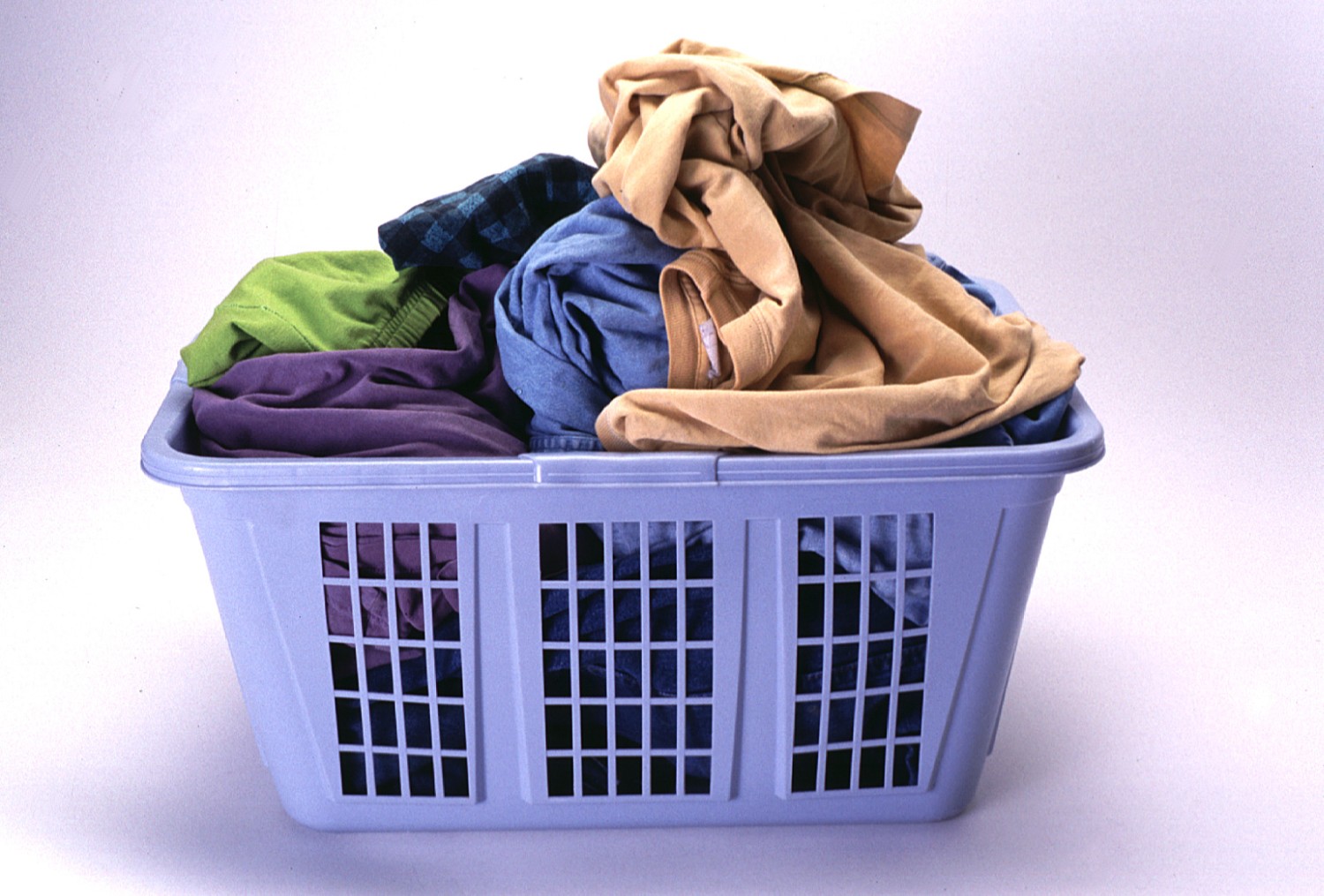
  7. Do the laundry before it’s overflowing
  8. Tape inventories to pantry doors so you know what you have
  9. Do all errands and grocery shopping on ONE day each week (this cuts down on grocery bills big time)
  10. Keep all your favorite cleaning supplies (what?! You don’t HAVE any favorites?) all in one place, in a handy bucket

Before you know it,  these habits will have gelled into a tidy house, a straightened desk and an orderly mind. All of which are absolutely essential to creating magic every day—whether that’s mothering, writing or anything else you do that defines who you are.

Step one to an awesome life?

Pick up your clothes.

Anybody else got any tips on how to straighten and tidy your life fast and effectively? Love to hear ’em…!

On the Right Track to Balancing Super Stardom with Motherhood

I imagine this post will likely go right up there with being of interest to only a very small percentage of the people who read this blog but I’d like to at least ask the moms in the crowd to hang back (after the stampede.) To everyone who loves horses, an important event occurred last week that had the Twitter-Facebook sphere “awwwwing” with even more frequency than usual.

And that was: Zenyatta had her baby.

Now, if you don’t know who Zenyatta is, that’s cool. And not everyone who wasn’t living in a cave or under a rock would know who she is. Zenyatta is an ex-racehorse considered by many experts to be the greatest thoroughbred racehorse in history. Okay, so now aren’t you embarrassed that you haven’t heard of her? That statement would’ve been a tad more emphatic if she had won her last race—the only one in her entire history of racing BTW that she lost (she came in a very close second, so “lost” doesn’t really seem a totally fair assessment.) Anyway, she is, without argument from anyone, the all-time North American female money-earner. Like, ever. Okay, so granted she’s amazing.

She is also jaw-dropping beautiful. And monster-big, for a mare.

She’s also sweet. To say that about a racehorse is kind of a big deal. She is—get this—affectionate. She totally knows she’s the star of the show and she used to do a daft little dance before her races for the amusement and general delight of the equine media who, of course, adored her.

She retired at six years old after her last race—the Breeder’s Cup Classic, which she’d won before (the only female to do so)—and was paired up with a stud named Bernardini. (Her jockey was quoted on Sixty Minutes as saying that no stallion was worthy of her.)

In any event, on March 8, her bouncing baby colt—all 130 pounds of him—was born, a dark bay with a white star and polka dot markings on his feet just like his Mom. And the equine world rejoiced!

I think the thing that prompted me to do a post on Zenyatta was this little video clip that I saw of her loving on her new foal. While everyone always talked about how friendly and sweet she was, it still touched me to see her with her colt. She literally keeps the little fellow within kissing distance nearly all the time (not easy to do as you’ll see in the clip.)

As a mother myself, there was just something exquisite about seeing this amazing super-creature delight in motherhood to the extent she clearly does.

So that’s it! A little corny, I know but what with these impending empty nest blues I’m wrangling with, it doesn’t take much to get me all emotional about the parent-child bond! Just had to share.

Will You Pay to Have Your Indie Book Professionally Reviewed?

I would love to hear some opinions on this question because I really struggle with whether or not to pony up the 400 smackers to have my book professionally reviewed. Let’s face it, a reputable book review source, especially for an Indie author, can be a great way to attach credibility and the promise of quality to your book that doesn’t come from your own self-serving mouth or  your less-than-famous name.

A positive book review is something you can slap on all your collateral and sales material, even on the book itself.

A positive book review makes the prospective reader’s job that much easier. It allows everyone to relax because a higher power has deemed that the book you’re about to read is fine…maybe even, Saints be praised, good! And if you, as an unknown Indie author, had to pay for that review, not unlike how you had to pay to get your prose line-edited and your cover designed, well, isn’t that just the cost of doing business as an Indie? If you’re like me, I can just see you fantasizing about the 14-point bold type tripping across your book cover above the title: “Storytelling that tingles the spine and enchants the soul…” Kirkus Review. It’s a lovely dream. Except for two teeny tiny little points:

Point Number One. Kirkus Review is not a paid review service and they don’t review Indies. Kirkus Indie, on the other hand, does. The good news, is that you get the name “Kirkus” one way or the other. The bad news is that you’ll pay $425 for a review in 7-9 week and $575 for 3-4 week turnaround.

Oh, yeah. Point Number Two. There’s no guarantee the review will be positive.

If you don’t contest the benefits of positive reviews and being able to use them to promote your book, then you probably know you need to be spending more time asking for them. Whether you pay for that review and take the chance on it being favorable or not (a bad review is a painful way to spend $400) depends on the state of your checking account and how strongly you believe in your book. There are, of course, studies out there that will support the belief that even a bad review is better than no review when it comes to creating visibility for your book.

Well? Anybody who paid for a review and was happy or not happy?

Here are a few more links to check out on the subject. (BTW: When I checked out BlueInk Review, they wanted $395 for a 7-9 week response or $495 for the review in 4-5 weeks. (I don’t know about you, but if I’m paying $400, I want to be able to use the name Kirkus on my sales materials.))

http://straightfromhel.blogspot.com/2011/06/kirkus-review-guaranteed.html

http://www.kirkusreviews.com/book-reviews/indie/

http://www.blueinkreview.com/

http://publishingperspectives.com/2011/07/case-for-fee-based-reviews-self-published-books/

Is it Vanity to be Indie?

The leaves were changing, the barbecue was spicy, the air was nippy. It was the perfect October day for an outdoor literary festival up in the mountains. Whenever I attend or present at a writers conference or book festival, I always leave with a smile on my face at having met so many awesome writers and readers (the gas that makes us go!) This particular weekend was no different. But what was different, was the fact that I met no less than twenty authors talking, unhappily, about their publishers. What was different about it, was that almost all of these disgruntled writers were referring to their indie publishers.

Okay, most of us Indies know the drill of publishing to Amazon or Smashwords. It can be a pain in the ass and often takes forever to get it perfect, but it is NOT, as I’m always reading all over the net and can personally attest to, rocket science. So when I heard author after author complain about their publishers saying it took three and four months to put their books up on Amazon, I was astonished. Furthermore, every one of these authors was giving 50% or more of their e-book royalties to their publishers—their indie publishers. What the heck was going on? Did the slimy agents and trad publishers shimmy out of their traditional publisher’s costumes and come to the ball dressed as Indie? Is it just irresistible the idea of taking advantage of the clueless author? Again?

Additionally, every one of these Indie authors was selling copies of their print-on-demand books for well over $15. For a paperback!! When I gave a wandering bookstore owner at the festival a few copies of my book, Toujours Dead, to sell on consignment, she couldn’t believe I was selling them at the literary festival for $7 a piece. I shrugged. “I make a profit on them,” I said.   How? Easy. My Indie publisher (who happens to be ME) does not charge me $10 a book after paying for full production on a print-on-demand book. Before Createspace, Amazon’s print-on-demand arm, made it easier to make a profit on the per-book cost of producing a title, I always produced my print-on-demand books through Lightning Source (LSI). It involved a more expensive setup and skillset, but I come from a marketing/production background, so that was no problem. I decided to ALSO publish my books with Createspace  because Amazon had made Lightning Source books harder to access through them (with ridiculously long shipping times) and I wanted to remove as many barriers as possible for those readers interested in my books. But I also needed to be able to buy cheap copies for myself to sell (which I could  do better thru LSI).  With the new changes implemented at Createspace earlier this year, the per-book cost to produce these titles in print-on-demand is now cheaper than using Lightning Source so I probably will just continue with Createspace.  Toujours Dead, for example, cost me 4.27 through LSI for every copy I bought. If I was selling my books from a booth at a conference, $7 was a nice retail price for me, and I could even go cheaper if I wanted to and still make a profit. Now that the same book cost virtually the same to produce thru Createspace ($4.45) and without the $70 setup fee (plus every change I make after the proof is another $35), I’ll likely never go back to LSI. Note: A few of the authors who had discovered Createspace were happy with the quality and the cost of their books, but one admitted he got a little over his head and said he had to “upgrade” to get the help he needed. When he did, the price shot up like the Titan 1 booster rocket on a clear day.

Okay, but back to our poor, hapless authors, the ones who were totally enjoying their day until they met up with me. They had shelled out over $1,000, some of them, to get a print-on-demand book made—and that didn’t even include the cover design! (Except for one or two, the covers were generally awful, about what you’d expect from a writer who’s an expert at writing but less so with the whole design thing. Unfortunately, these covers had all been created by their so-called publishers.) Then the authors bought copies of their own book at prices that made it prohibitive to re-sell them!

In more than a couple cases, I was told by happy authors (at least they were happy until they talked to me) that putting their books up on any of the online distributor sites like Smashwords or Amazon cost extra! I told at least five writers that it was free to publish a book on Amazon. One of them actually blurted out: “You lie!”

Bottom line: be careful out there! It’s not just the agents and the trad publishers who want a piece of you…sometimes it’s the indie publisher. If you’re going to make this work as a business model, you need to be savvy, snug with your money, and know upfront exactly what you want. To that end, I met a sweet old guy at the festival with cute but, in my mind, largely unmarketable stories about talking hedgehogs and sheepdogs. His publisher, who had a booth near mine, referred to her business as a “hybrid publishing” model, NOT a vanity press, she stressed to me (three times.) This old fellow had paid his “hybrid” publisher $1,200 and received 50% royalties, on his print and e-books.  Am I being too cynical? Is there such a thing as a hybrid publisher? Or is this really a subsidy press by another name? In any case, I can’t remember seeing a happier soul. He spent a beautiful autumn day sitting in front of a sign that said “Author Will Sign” talking to people and chatting with “his publisher,” a pretty young woman who fussed over him as if he were Stephen King. That’s why I say, it depends on what you want out of the experience. Personally, I believe that gentleman was enjoying every penny of his experience. And good for him!

Love to hear what you think or some of your experiences on the conference/festival trail!

How to Steal Your Life Back

I have been reflecting recently on work infrastructure in an ideal world. While writing books fulltime would definitely qualify as an ideal work life, as I have not won the lottery yet (and, much to my accountant’s horror, it is totally a factor in my retirement plans), that “ideal” has to live side by side with less-than-ideal money making schemes.

This is a conundrum that writers down through history have struggled with. There is the school of thought that says if you are a writer you must find something non-writerly to do for your “day job” or you’ll burn out. The usual scenario suggests, if you’re young enough, waitressing by day and writing by night. As exhausting (and probably uber-annoying) as waitressing sounds to me, it does give you an opportunity to study the human condition and that is something that is generally considered very helpful (and fascinating) to most writers who are, at the very least, writers of the human condition.

I have to say I’ve written a few books “on the job,” so to speak, in my time. When an employer is paying you to dig so many ditches, I can imagine you dig the requested number of ditches and you rest or eat your lunch on your lunch break with little thought to squeezing in a paragraph on the brilliance of the morning dew dripping in fat globules down the stately cab of the backhoe. But when your employer is paying you to essentially “be ready in case I need you to write something” and you spend great wads of time staring out a window waiting to be needed, then I think flexing your writing muscles by knocking out a few novels is probably okay. (Hey, I would totally put aside any manuscript immediately if the boss needed me for something!)

I thought I was the only horrible (read: frustrated, poor and bored stupid) employee who did this until I pieced together part of a fellow-writer’s dossier online. I could see by what he said that he had a fulltime corporate sit-in-a-cubicle job, a weekend wait-on-customers at his uncle’s hardware store and yet another job working a deli counter somewhere. And he publishes end-to-end novels. We’re talking, easily four a year. And they’re good!  So while I was scratching my head wondering how this superman was doing this (granted, he’s single with no kids), he mentioned in a tweet how he was beginning his next WIP while he was at work at the office. A little light went on. A fellow time-thief! So that’s how it’s done, I thought. Just as I once did it, myself.

I must say, if everyone is happy, I consider this, totally, a victimless crime. (Although I imagine this post won’t win me too many interviews once I share it to LinkedIn). If the work is getting done, how is this time theft any different or worse than gabbing by the cooler or taking thirty minutes to apply your makeup in the bathroom or working your way through a Salem menthol six times a day on the back deck?

Exactly.

Getting paid to write books. Who knew it was so attainable?