Empty Nesting is Not for the Faint of Heart

I swear to you, as God is my witness, that I turned my back to make my eight-year old son a peanut butter and jelly sandwich and when I turned around, he had graduated high school and left for college.

This is not hyperbole.

Well, okay, it is. But I swear it feels like it’s true.
I cannot believe it’s nearly time for him to leave already. I can’t believe all the school pictures that I have been painstakingly placing in the photo albums through the years are now finished. I hold the final and last one in my fingers. This photo of him grinning–so self-assured!–in his tuxedo and too-long hair (a little senioritis rebellion) is the endcap for his school years that began with the  mother’s morning out that he and I pretended was “real” school, because he went with a backpack and a snack and came home with praise from the “teachers” and excited reports about the other kids on the playground—particularly fascinating for an only child.
And now he’ll be “coming home” at Thanksgiving and Christmas. I feel like turning to my husband and saying: “Did you know there was an end date?” Why don’t they tell you that when you bring your little bundle of joy home from the hospital? “Hey, New Mom, word to the wise.  He’s already plotting how to leave home.”
While it’s true I have a couple months yet before we pack John Patrick’s bags and shop for his dorm furniture, I already see previews of the life to come in how his older friends, home for the holidays last year, behaved (so grown up!) and in John Patrick’s impatience this spring with his last few months of high school.
I  promised myself that I was not going to be one of those clingy mothers who refuses to let her child stretch his wings and fly the nest. I want my son to have an awesome college experience, maybe meet someone special who we’ll all grow to enjoy and love.

But until then, I totally reserve the right (when he’s not present to witness it) to be as sad and bereft as I know how to be at the ending to what was, honestly, the happiest and most fulfilling eighteen years of my life.

I know he’s literally counting the weeks until he goes. He’s anticipating the official beginning of his new exciting life. That’s as it should be. His Dad and I will wait for him to come home and report on his new world, his teachers, and new friends. Before he leaves again.

And it figures, the dog he leaves behind doesn’t even like peanut butter & jelly.

It’s A Scary World Out There

Long before social media put us into each other’s pockets and  thoughts on a moment to moment basis, we had discovered that bad things were happening all over the world. We weren’t just hearing from the next-door neighbor that somebody on our street had fallen down dead for no reason—we were also hearing about bizarre and awful things happening from as far away as Sidney, Australia. And when you hear about the problems of the WORLD in a steady stream, it starts to make you feel like bad stuff is constantly happening everywhere all the time.

I don’t think I’m unusual in my certainly irrational anxiety as I’ve watched my son go from one life experience to the next. Added to the worries of the last generation of “when she starts driving will she have an accident?” is the new concern: “will she have an accident and then be abducted by a serial killer because I know for a fact that can happen.” I’m not saying information is bad. We as a people long to know what’s going on with each other. Although Americans have been accused of only being interested in what’s happening in their own backyards, I think we’re all curious about the human condition wherever it is. It’s just that, instead of registering: “yep, that’s awful” over the discovery of a shocking story, we tend to gather up all the horrible, shocking stories (or rather the media does) and stack them up so high around us that all we see is a shocking and horrible world. And that is the world we are sending our treasured sons and daughters off into. Can they help but be timorous after twenty years of watching Mom & Dad hold their collective breath every time they tried something new?

I don’t think my own parents loved me any less than I love my son. But they allowed me the freedom to experience life on my own terms that I have never been comfortable giving him. (When my father was stationed overseas in the early sixties, my little brothers and I freely wandered post-war Germany like scavaging souvenir-hunters, happily dragging home ancient hand grenades and unexploded bombs. Come to think of it, my parents may have been a little more laid back than most.)

Possibly it was ignorance. In those days, you didn’t hear the words “child molester” or commonly consider the possibility that dear old Uncle Ray might be inappropriately eyeing your son or daughter. It  never occurred to you not to let your child ride his bike wherever he wanted to go, or even be gone for the full day if that’s where his adventures took him. Was it really a “kinder, gentler” time as George Bush, Sr used to say? Or was it just a time where bad stuff  happened and our parents were oblivious to it? Are the fears we have today real? Or are they just a reaction to the flood of horror stories we now all hear about in the world community?

Finding Your Peeps Out in the World

Finding your tribe, your peeps, your people. Not to restrict this important part of living to just that of writers, everyone needs community. While it’s true I belong to a nuclear family, an extended family, a parish, a neighborhood and a community of other high school student parents, it wasn’t until I left my corporate job and began to reach out to other writers that I realized I didn’t truly have a community of people who spoke my language. It takes all kinds to make a parish, for example, and that’s great. Because all the differences add valuable and differing skillsets and perspectives. But an artist laboring in a cubicle with corporate drones is not just a different piece of cloth in a multi-colored quilt. She is acting out a perverse situation of mismatch, misfit, and misconnection that adversely affects her on every level. The reason I continue to bang on this particular drum is because for most of my  tenure in a corporate office, while I knew I didn’t really belong, I also didn’t see to the extent the attempt to fit in was bad for me. About two months after I left my job I went to a writers’ conference up in the mountains of north Georgia. There I met authors and writers of every stripe. I met geezers with boatloads of ancient trunk material they were self-publishing for their families, I met traditionally published authors who swaggered about accepting accolades for being incredibly lucky to be recognized as “real” writers, I met teens who only had scribbled poems and short stories they published on Facebook. I met writers a lot like me and writers nothing at all like me. And I was blown away by the fact that I felt connected to every single one of them. Even the ones I would’ve edged away from in an elevator or crossed the street to avoid. Even the obnoxious ones. Even the ones who shoved their self-published prose at me to prove within a few seconds that they couldn’t write very well. Even those people, I felt more connected to than the people I’d shared birthday parties and company picnics with for the five years previous. You don’t have to like every member of your family, but that doesn’t keep you from acknowledging (usually) that they are your family. Breaking out into the world of weirdos and writers, artists and losers, the pompous and the generous has lifted me up and filled me with a sense of belonging that I literally never had before.

My peeps. My peers. I love being with them. I love talking to them about writing. I love recognizing the same struggles in them that I have with my own work. They understand me because they understand my passion. They understand my pain.

When I started blogging last year, I read all the advice about not doing a blog for writers because how can that be helpful in marketing your work? I worked so hard not to make this a writing blog but something readers might be drawn to (for obvious reasons). But writing is a passionate interest of mine so, like any other passion, I kept turning to it time and time again. It’s also the thing I’m attracted to in other people’s blogs—their take on writing, their perspective on writing schedules, their writerly worldview. When I realized that, regardless of what the social media experts preach, a writing blog is what fills me up and satisfies the parts that other topics can’t reach, I stopped trying to write for nonwriters. Not to take anything away from my parish or my family but when it comes to writing there is a singular language that only another writer speaks. Just like the expatriate I once was, I have to say sometimes it’s just so nice to relax with your own people.


Look Where You’re Going to Get Where You’re Going

“It is a truth universally acknowledged…”

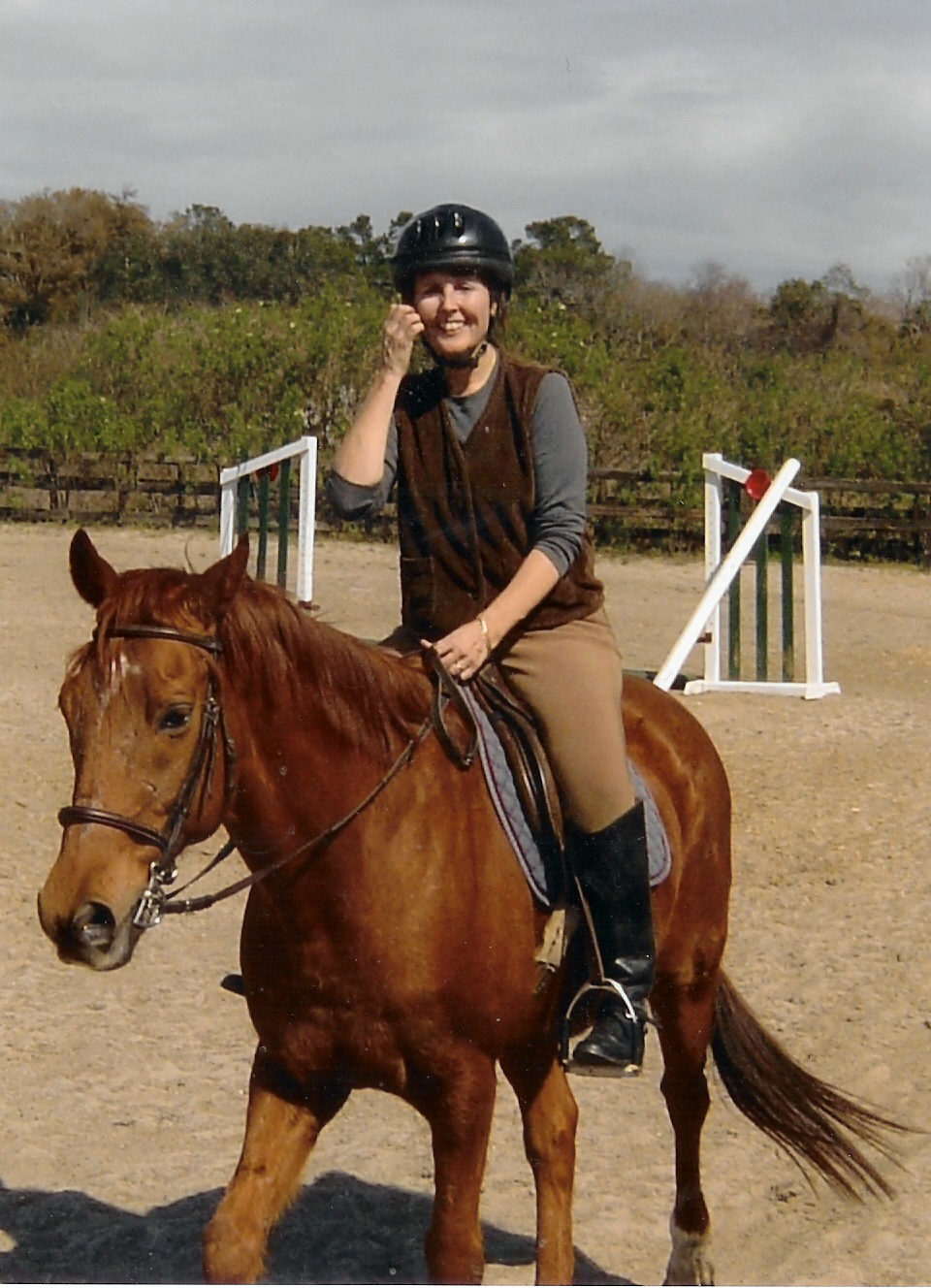
Not just  a great first line, but a comforting thought.  Don’t you love universal truths? Or truths we all buy into? I do because it means  the fact that there are truths we all acknowledge as true means we can look to a universally accepted blueprint for how to live our lives. One of the places I look for these universal truths is at the barn. I look there because it’s one of my many opinions that there is no group of people on earth with more quotes relating to living your life than horse people. For example, there is the one about how to jump fences on horseback which, when you think about it, really applies to anything in life that you tackle that’s a little scary but worth doing. It goes like this: “Throw your heart over first, and the horse will follow.” The point about that one seems to be that if YOU’RE not sure you can jump that five-footer, you’ll inevitably translate that doubt to your mount and he’ll ensure you don’t jump it. When judges grade a jumping competition and a horse balks or refuses a jump, it’s the rider they look at for hesitancy. They tend to figure that if the horse is physically capable of jumping the fence but doesn’t—it’s pilot error, pure and simple.

Like anything in life, you gotta believe it before you can do it. And horses are amazing the way they can mirror how you’re feeling. But for all that, the point I wanted to make today is that when you are sorting out your life, the process is a lot like riding a horse in that you, as the rider, really must look where it is you want to go. Ideally, this is right through his set of ears like a kind of organic scope. You don’t look at the ground, obviously, although new riders often do because they want to make sure everyone’s feet are going where they should. But looking at the ground is a great way to end up there.

Riding a horse–like living your life–is a delicate balance. You are not just a sack of feed up there for the ride (or at least ideally not.) When you turn your head, the horse feels it, the horse reacts even if just a little bit. If you are looking down, instead of up, or to the left, instead of to the next line of jumps, that’s where the horse is now looking too. Which, since that’s not where you want to go, looking over there is not a good thing.

Kristen Lamb has this section in her book Are You There, Blog? It’s Me, Writer where she interviewed some NASCAR drivers for a piece she was doing and they, basically, told her they try not to look at places they don’t want to go…like the wall, for instance. It seems that in professional driving as in life and in horseback riding, it’s important to zero in on where you’re going.

Like I said, I love it when universal truths really are universal.

Time Travel Made Easy

When you think about some of the reasons we read, I believe that being transported to another world must rank pretty highly. For me, anyway. I don’t dislike my life but I do love to escape to  places very different from it. This visit to a different world  coincides with my interest in time travel—something I  can’t easily do with a Delta Airline ticket but I can do with, say, any of Diana Gabaldon’s titles!

On the other hand, there have been a few counties in my life that were awesomely exotic to visit and also, in a small way, offered a taste of the experience of a different time, too. No offense to France or New Zealand—two of my most favorite countries in the world and two through which I’ve traveled extensively, but, at least in the sixties and the eighties, travel to either country could  easily make you feel as if you’d traveled back in time about twenty years. Depending on where you travel in France or NZ, you still can. (I have Kiwi friends who tell me today (with some annoyance) that times have changed and they have all the same GAP stores that I do in Atlanta.)

But my point is that there was a time, when I lived in New Zealand in the mid-eighties where I felt like I’d been dropped into an episode of Masterpiece Theatre. And we’re talking one of their Victorian period piece set dramas, not Inspector Lewis. While it’s true I’d spent the last five years living in a shopping mecca with easy access to Nordstroms, Macy’s, Saks Fifth Avenue and the like, when I moved to Auckland there was only one department store (called Farmers) in the whole of the largest city of the country, and that looked like it’d been plucked from Macon, Georgia. In the mid 1950’s.

For me, it was charming. It was delightful. (Besides, you could always mail off “back home” for stuff you really needed.) And it was an opportunity to live in a time that my parents had lived in, to experience life in a slower pace.

The view from my rental house in Murray's Bay, 1986. The rise on the horizon is Rangitoto, an active volcano that served as a visual focal point no matter where in Auckland you lived.

Once, when I was having lunch with some colleagues in Wellington (I worked at Ted Bates advertising agency in Auckland) one of the men told a story about a rustic inn he’d stayed at on his honeymoon somewhere in Greece. He talked about how the little bar-restaurant he and his bride frequented kept serving them cold dinners. When I asked why the proprietors didn’t just pop the meals in a microwave, he looked at his pals at the lunch table and said: “God, I love Americans.” (Said in a way to mean NOT.) Then he  said: “I make $82,000NZ a year and I don’t have a microwave oven. Does anyone at this table have a microwave?” He then looked at me. “Do you have a microwave?” (Naturally a microwave was one of the first things I’d acquired after moving to NZ but I did think he was making a super BFD of the whole microwave thing and so took the opportunity to switch the subject as soon as was feasible.)

I admit it. I am a slave to my silly American conveniences!

My deduction was that possibly it was easier for Americans to experience time travel than those from some other countries. (Which, now that I think about it, might logically mean that people from other countries who visit the States would be able to experience travel to the future! Which would also be quite nice, I’m sure. ) (Okay, please hold all hate mail, I’m KIDDING.)

Has anyone else had the feeling that they were going back into time (or into the future) when they visited a foreign country? Was that something that added to the experience for you? If so, I’d love to hear any stories you’ve got!

Belonging Starts by Leaving Home

I have lived at 35 different addresses in my life. 13 of those addresses were before I turned 18. The 22 apartments and houses since then are the legacy of an ex-military dependent who spent the bulk of her childhood moving, saying goodbye, saying hello. My husband, who spent his entire childhood and adolescence in one neighborhood and in one house, is resigned to my relentless restlessness (eight of the 35 moves were with him.)

It’s my belief that the feeling of belonging and travel are not mutually exclusive. I think, to a certain degree, we travel in order to feel like we belong. Not only does travel give you a glimpse of the rest of the world, and therefore a snapshot of your place in it, it also helps you to see that we are all a part of one large human family.

In fact, the expatriate experience—one that you’d typically think of as apart or separate from the collective group—is really a definitive exercise in belonging. Nowhere is the feeling of belonging more strongly felt than when you live abroad and happen upon a fellow American. This could be someone you might not bother to cross the street for back home, yet in this context—say one where they are the only American besides yourself in a room of foreign nationals—they are met with real pleasure and enthusiasm.

Think of all the expatriate clubs and organizations in Paris, for example. First, there are an astounding 165,000 Americans living in France today (50,000 in Paris, alone) so they have no problem getting a taco party together to watch American gridiron or feeling like “they belong.”

Then, of course, there’s the technological revolution and how it’s affected the expatriate. When my husband and I lived overseas—he in the late seventies and me in the mid-eighties—contact with family and friends was expensive and slow. A letter to New Zealand from the States could easily take two weeks to get to me. The phone calls—expensive and infrequent—had serious quality issues, (like a humpback was squatting on the cable that threaded along the ocean floor from Jacksonville, Florida to Auckland, New Zealand.) My husband and I often remark how much easier it would be to live in a foreign country today, with skyping, and the instant gratification of cell phone contact. During the decades that he and I lived overseas, we felt truly and completely separated from our support group of friends and family back home.

The plus side, of course, was that it added to the immersion effect, for us, a large part of the reason we were overseas in the first place. He was living in Germany at the time and the lack of home contact probably aided in his mastering the language that much faster.

Like all travel, living abroad tends to give you perspective. It gives you a different point of view either of how you live back in the States—or how you want to live. Have you ever come back from a trip overseas and then made a drastic change in your life? I would love to hear how a trip or travel in general has changed you.

The Perfect is the Enemy of the Good

I think this is a great line for those of us obsessed with trying to control our creative products  as we steer our way through life. The perfect is the enemy of the good. How could trying for perfection end up creating imperfection? I think the line is really a warning against going to extremes. Obviously, perfection is pretty extreme. I mean, it’s perfection! Some would say perfection is so extreme as to be unobtainable. I’m not talking about formatting issues or typos in your epub doc (although surely one might strive for perfection in that case?) but I get it. Trying to make things perfect can keep you from moving on and doing other things as important or even more important.

It’s easy to see this principle in play when I’m in the process of obsessively tweaking or twiddling with a paragraph in a book I’m writing. If I believe that book sales lie not in social media prowess (as I do) but rather in having available a fat inventory of awesome books, then making  any paragraph “perfect” is a barrier to what I say I want: mega book sales. Because I don’t write literary PD-James-type fiction, a belabored but beautifully descriptive paragraph of a country lane that brings tears to your eyes is not going to get me where I want to go—writing my kind of books, women’s lit and thrillers, quickly. But I’m a writer so I can get sidetracked into the aforementioned paragraph tweaking until my afternoon is gone and the day’s word count not even touched.

Okay, so I believe that less is more in the writing  department but I definitely believe that more available books are more in the book sales department. By that I mean it makes more sense for me as a genre writer to knock out a great fast-paced book and move on to the next one than it does to try to get any book I’m writing “perfect,” which I don’t believe I can do anyway. Once you accept that basic tenet, it’s just a quick step to applying it to our trickiest project of all which is knowing when your book marketing efforts are taking up too much of your time because trust me that is one endeavor you will never get perfect no matter how many books you read about it or how many hours in your day you dedicate to it. As with writing, you need to know when to step away from the keyboard and let it go for the day.

Like anything in life, I think it comes down to asking yourself the question: what do I want out of all this? Do I want to write literature or tell a good story? Do I want to sell lots of books to average-Joe readers or do I want a write-up in the New York Review of Books that I can frame? Do I want 10,000 Twitter pals or ten emails from people who have read my book?

Personally, I don’t have to be JK Rowling famous. I just need enough readers who like my kind of books to allow me to make a living doing what I love.

Now that doesn’t seem too extreme, does it?

Does What We Do as Authors Really Matter?

Today’s post is another contributing chapter in the Social Media saga as it pertains to authors trying to flog books to the millions of as-yet unaware readers “out there.” If you will direct your attention to Exhibit A—the chart you see here was pinched from a recent Romance Writers of America article. (The article had a whole bunch of other interesting facts and stats you might want to check out.) While it’s true that Romance readers are different from other genre readers, there’s an argument to be made that how they decide on what book to read next is not terribly different from how other readers decide.

As you can see, if this chart is correct, a whole lot of effort is being made by myself and my fellow-authors in areas that prospective readers are not very interested. In fact, the only area with a remote interest shown is that of our websites and even then it’s less than 50%. Personally, after you wince your way through the big long blue bars, you have to discount the red bars, too. Because let’s face it, if you have to convince people first to do whatever the thing is over and above looking at your book, it might as well be a blue bar. For example, on the one that says “saw a promotional book trailer and bought the full book,” if 23% said “not done but some interest,” what does “some interest” mean? I think it means now you have to convince them or interest them in watching the damn trailer before you can lure them into your web to peek inside the book. That’s a lot of hoops to jump through before they start to consider whether or not they want to read your book. In fact, the only portion of this chart that we need to be looking at is the purple part and, except for the author’s website (even so, barely 40%) the rest of these activities look like, if not a waste of time then at the very least something that takes you away from writing.

Again, that’s just me and if you know me at all, you know I lean in the direction of lazy. So what do you think? Is the chart shocking? Do you still believe? Are dreams really not about ROI? Love to hear your take…

The One Thing You Need to Know to Have a Great Life

Like a lot of people, I get much of the philosophy by which I manage my life from popular movies. (Hey, those scriptwriters are wise people.) The problem with our culture today, as illustrated by that brilliant scene in “The Hurt Locker” where Jeremy Renner plays a character who has nerves of Titanium yet is literally stunned into inertia by the mind-numbing plethora of toothpaste choices at his local grocery story, is that we have too many options.

Gone are the days when you knew you only had your folks’ farm or the garment-sewing factory to look forward to. Nowadays it’s been drilled into us relentlessly since our very first Disney movie that we can do and be anything we want. Screw the Ford factory assembly line! You could be President! Or a famous director on Broadway. It could happen. Things have changed since our parents’ parents’ generation, oh they of the Few Options. Because so many more people are able to get  college degrees than a couple generations ago they have more options. With more doors to choose from, there is more consternation about choosing the right door. After all, writers create short stories about people who choose the wrong door and then their lives go totally to hell.

So, if I can get you to accept that we have more choices and more options than ever before then I can get down to the point I’d like to make which is, there are more wrong roads we can take now too—and not because someone (or poverty) pushed us down that road but because we chose it for ourselves.

Since having a great life is within our power—if we make a series of right choices—then there is a lot of pressure on us to make those right choices. Which brings me to one of my favorite philosophic movies of all time, City Slickers with Billy Crystal and Jack Palance. While the premise of the movie was that Billy’s character had lost his oomph with life, his wife, his dull kids, and definitely his job, it was the line by Palance’s character, Curly Washburn, that lit up the screen for me in a way that would have me remember the moment ever after.

When Billy was whining about how he wasn’t fulfulled and maybe he didn’t have the job he really should have, Curly told him that the secret to life was “one thing.” He held up that big gnarly gloved finger in Billy’s face and I remember clutching for the next words out of his mouth that would tell me—and every lucky person who was watching this movie—what the one thing was that we should all heed. Imagine! In the ten seconds or so that the director milked the line for, I really did mirror the look on Billy’s face: this old grizzled cowboy who lived basically and in the present had the secret to a happy life and was going to tell me! Then all I had to do was plop it into a simple formula that related, somehow, to my own life, and finally, I would be on my way amid the tsunami of choices and wrong exits that pocked my life.

Why is it we love the simple and the streamlined? There’s an argument that nothing really important can be sorted out by a simple formula. True, complicated issues sometimes are solved by very simple answers, but I’m thinking rarely. Mostly, if the conundrum is a complex one, you can bet it’s not a simple matter of: eat more roughage and add ten minutes to your evening walk.

Like a lot of people, though, I’m a sucker for any self-help book that starts out: “The only THREE things you need to know to reduce debt (lose weight, make better grades).” And I should know better. I’m an advertising copywriter. I write this crap for a living!

Okay, so after much milking of the time between the promise and the delivery, Jack Palance finally coughed up the “one thing,” which was different for everyone.

Huh? Turns out, you had to go and find the $#@!! “one thing” that was YOUR “one thing.” Bloody hell! Yeah, Billy looked pretty disgusted, too.

But once the easy answer and free lunch was mourned and gotten over, the “one thing” concept did start to roll around in my brain parts a bit. And while it wasn’t as soon as I walked out of the movie theatre, it was within the year: I began to form in my mind the “one thing” that mattered to me and that would help me walk in the direction of making my life worthwhile.

And once you know it, it’s true: it turns out you really can spend your whole life’s journey working to achieve it. That’s something else I discovered: (I think it was in the movie “The Year of Living Dangerously”) the steps in the journey are even more important than the destination which, let’s face it, could just as easily be a nursing home (or worse) than that beautiful Craftsman-style home in the better neighborhood you have your eye on.

Step by step, day in day out.

So. What’s your “one thing?” Do you know it? Are you still figuring it out? Love to hear from you!

Organize Your Life Like You Would Your Closet

Your perfect closet.

I am going to go out on a limb here and tell you something about yourself that you probably already know: You can’t do your best work, your best thinking, your best anything if your world is a cluttered, chaotic shambles. I know it makes a good story to say that you are the kind of person who can create brilliance out of a maelstrom, but, frankly my dear…

…pull the other one.

I don’t care what it is you’re doing: baking a cake, writing a chapter, digging a flower bed or compiling data in a spreadsheet, you need a tidy, everything-in-it’s-place platform from which to work, or the result will not—repeating here—will NOT be the best it could be. I am as bad as anyone for dining out on how I used to do flash cards with my five-year old, write a scintillating inciting incident for my mystery series and roll out the dough for a cherry pie all at the same time. Today? I can only imagine how good that chapter would’ve been if I’d just had TEN DAMN MINUTES TO MYSELF. Oops, didn’t mean to yell.

The five-year old is now sorting through college offers so he no longer serves as any kind of excuse for not doing my best work. But the point I’m trying to make is that an organized mind, an uncluttered desktop, and a quiet work environment really do make a difference to your end result.

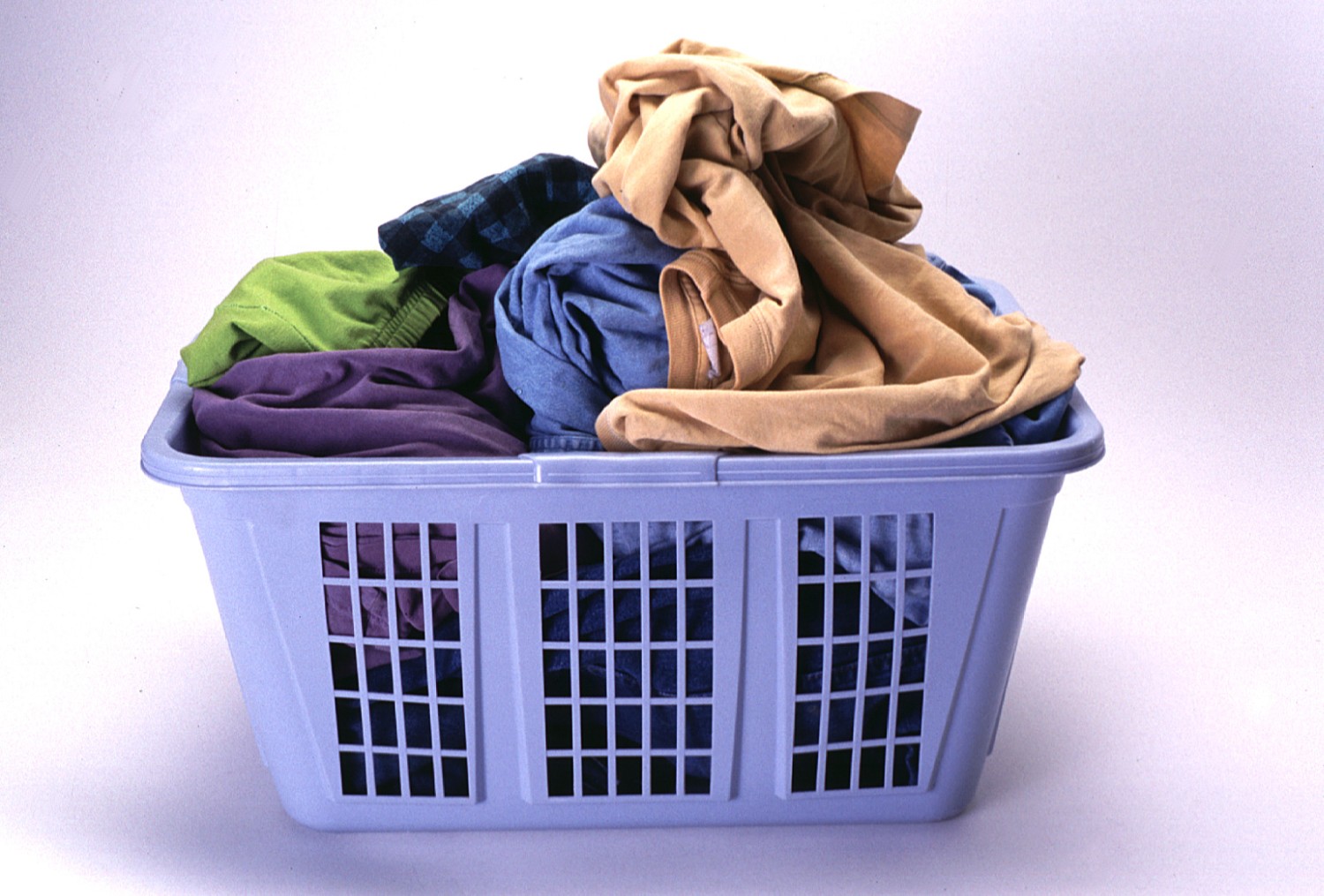
It is worth the extra fifteen minutes it takes to pick up the dirty clothes, tuck the breakfast cups in the dishwasher, sweep up the kitty kibble and put all your (metaphorically) sharpened pencils in their  cup before you tackle whatever work you have on your schedule. Even if it doesn’t feel like it’s directly related to your real work you, the sensation of an organized world will prompt an ordered clarity in your thinking that can only enhance whatever it is you’re trying to do.

I once read an article that said people who tidy up after themselves and put away their tools when they’re finished are actually more relaxed and chill than the Oscar Madisons of the world. Let’s face it. It’s one less thing to worry about if you already know where that overdue gas bill is or if you can fling open the front door to an unexpected visit from the minister’s wife without embarrassment. These kinds of people are much more serene than the slovenly of the world. I don’t care how much someone brags about being a slob, when they walk into their apartment and it’s a disaster, they die a little bit. If nothing else, just the thought of not knowing  where the remote control is would make anyone churlish.

You might want to check out Maria Menounos’ very stylish and not-a-bit anal “The Every Girl’s Guide to Life.” Ignore the dorky name, it’s really got lots of great tips in it, like:

  1. Keep only what you need (now that’s a concept we could all use)
  2. Buy only what you need
  3. Make sure everything in your closet has its own place
  4. Get a toolbox. Stock it. Return tools to it.
  5. Get a label maker. Label scissors, tape dispensers etc with “Return to kitchen” or “Return to Susan’s office”
  6. Skip one major vacation and have a hot tub installed instead. Then enjoy mini-rejuvenations and spa experience on a daily basis!
  7. Do the laundry before it’s overflowing
  8. Tape inventories to pantry doors so you know what you have
  9. Do all errands and grocery shopping on ONE day each week (this cuts down on grocery bills big time)
  10. Keep all your favorite cleaning supplies (what?! You don’t HAVE any favorites?) all in one place, in a handy bucket

Before you know it,  these habits will have gelled into a tidy house, a straightened desk and an orderly mind. All of which are absolutely essential to creating magic every day—whether that’s mothering, writing or anything else you do that defines who you are.

Step one to an awesome life?

Pick up your clothes.

Anybody else got any tips on how to straighten and tidy your life fast and effectively? Love to hear ’em…!