On the Right Track to Balancing Super Stardom with Motherhood

I imagine this post will likely go right up there with being of interest to only a very small percentage of the people who read this blog but I’d like to at least ask the moms in the crowd to hang back (after the stampede.) To everyone who loves horses, an important event occurred last week that had the Twitter-Facebook sphere “awwwwing” with even more frequency than usual.

And that was: Zenyatta had her baby.

Now, if you don’t know who Zenyatta is, that’s cool. And not everyone who wasn’t living in a cave or under a rock would know who she is. Zenyatta is an ex-racehorse considered by many experts to be the greatest thoroughbred racehorse in history. Okay, so now aren’t you embarrassed that you haven’t heard of her? That statement would’ve been a tad more emphatic if she had won her last race—the only one in her entire history of racing BTW that she lost (she came in a very close second, so “lost” doesn’t really seem a totally fair assessment.) Anyway, she is, without argument from anyone, the all-time North American female money-earner. Like, ever. Okay, so granted she’s amazing.

She is also jaw-dropping beautiful. And monster-big, for a mare.

She’s also sweet. To say that about a racehorse is kind of a big deal. She is—get this—affectionate. She totally knows she’s the star of the show and she used to do a daft little dance before her races for the amusement and general delight of the equine media who, of course, adored her.

She retired at six years old after her last race—the Breeder’s Cup Classic, which she’d won before (the only female to do so)—and was paired up with a stud named Bernardini. (Her jockey was quoted on Sixty Minutes as saying that no stallion was worthy of her.)

In any event, on March 8, her bouncing baby colt—all 130 pounds of him—was born, a dark bay with a white star and polka dot markings on his feet just like his Mom. And the equine world rejoiced!

I think the thing that prompted me to do a post on Zenyatta was this little video clip that I saw of her loving on her new foal. While everyone always talked about how friendly and sweet she was, it still touched me to see her with her colt. She literally keeps the little fellow within kissing distance nearly all the time (not easy to do as you’ll see in the clip.)

As a mother myself, there was just something exquisite about seeing this amazing super-creature delight in motherhood to the extent she clearly does.

So that’s it! A little corny, I know but what with these impending empty nest blues I’m wrangling with, it doesn’t take much to get me all emotional about the parent-child bond! Just had to share.

Is it Vanity to be Indie?

The leaves were changing, the barbecue was spicy, the air was nippy. It was the perfect October day for an outdoor literary festival up in the mountains. Whenever I attend or present at a writers conference or book festival, I always leave with a smile on my face at having met so many awesome writers and readers (the gas that makes us go!) This particular weekend was no different. But what was different, was the fact that I met no less than twenty authors talking, unhappily, about their publishers. What was different about it, was that almost all of these disgruntled writers were referring to their indie publishers.

Okay, most of us Indies know the drill of publishing to Amazon or Smashwords. It can be a pain in the ass and often takes forever to get it perfect, but it is NOT, as I’m always reading all over the net and can personally attest to, rocket science. So when I heard author after author complain about their publishers saying it took three and four months to put their books up on Amazon, I was astonished. Furthermore, every one of these authors was giving 50% or more of their e-book royalties to their publishers—their indie publishers. What the heck was going on? Did the slimy agents and trad publishers shimmy out of their traditional publisher’s costumes and come to the ball dressed as Indie? Is it just irresistible the idea of taking advantage of the clueless author? Again?

Additionally, every one of these Indie authors was selling copies of their print-on-demand books for well over $15. For a paperback!! When I gave a wandering bookstore owner at the festival a few copies of my book, Toujours Dead, to sell on consignment, she couldn’t believe I was selling them at the literary festival for $7 a piece. I shrugged. “I make a profit on them,” I said.   How? Easy. My Indie publisher (who happens to be ME) does not charge me $10 a book after paying for full production on a print-on-demand book. Before Createspace, Amazon’s print-on-demand arm, made it easier to make a profit on the per-book cost of producing a title, I always produced my print-on-demand books through Lightning Source (LSI). It involved a more expensive setup and skillset, but I come from a marketing/production background, so that was no problem. I decided to ALSO publish my books with Createspace  because Amazon had made Lightning Source books harder to access through them (with ridiculously long shipping times) and I wanted to remove as many barriers as possible for those readers interested in my books. But I also needed to be able to buy cheap copies for myself to sell (which I could  do better thru LSI).  With the new changes implemented at Createspace earlier this year, the per-book cost to produce these titles in print-on-demand is now cheaper than using Lightning Source so I probably will just continue with Createspace.  Toujours Dead, for example, cost me 4.27 through LSI for every copy I bought. If I was selling my books from a booth at a conference, $7 was a nice retail price for me, and I could even go cheaper if I wanted to and still make a profit. Now that the same book cost virtually the same to produce thru Createspace ($4.45) and without the $70 setup fee (plus every change I make after the proof is another $35), I’ll likely never go back to LSI. Note: A few of the authors who had discovered Createspace were happy with the quality and the cost of their books, but one admitted he got a little over his head and said he had to “upgrade” to get the help he needed. When he did, the price shot up like the Titan 1 booster rocket on a clear day.

Okay, but back to our poor, hapless authors, the ones who were totally enjoying their day until they met up with me. They had shelled out over $1,000, some of them, to get a print-on-demand book made—and that didn’t even include the cover design! (Except for one or two, the covers were generally awful, about what you’d expect from a writer who’s an expert at writing but less so with the whole design thing. Unfortunately, these covers had all been created by their so-called publishers.) Then the authors bought copies of their own book at prices that made it prohibitive to re-sell them!

In more than a couple cases, I was told by happy authors (at least they were happy until they talked to me) that putting their books up on any of the online distributor sites like Smashwords or Amazon cost extra! I told at least five writers that it was free to publish a book on Amazon. One of them actually blurted out: “You lie!”

Bottom line: be careful out there! It’s not just the agents and the trad publishers who want a piece of you…sometimes it’s the indie publisher. If you’re going to make this work as a business model, you need to be savvy, snug with your money, and know upfront exactly what you want. To that end, I met a sweet old guy at the festival with cute but, in my mind, largely unmarketable stories about talking hedgehogs and sheepdogs. His publisher, who had a booth near mine, referred to her business as a “hybrid publishing” model, NOT a vanity press, she stressed to me (three times.) This old fellow had paid his “hybrid” publisher $1,200 and received 50% royalties, on his print and e-books.  Am I being too cynical? Is there such a thing as a hybrid publisher? Or is this really a subsidy press by another name? In any case, I can’t remember seeing a happier soul. He spent a beautiful autumn day sitting in front of a sign that said “Author Will Sign” talking to people and chatting with “his publisher,” a pretty young woman who fussed over him as if he were Stephen King. That’s why I say, it depends on what you want out of the experience. Personally, I believe that gentleman was enjoying every penny of his experience. And good for him!

Love to hear what you think or some of your experiences on the conference/festival trail!

How to Steal Your Life Back

I have been reflecting recently on work infrastructure in an ideal world. While writing books fulltime would definitely qualify as an ideal work life, as I have not won the lottery yet (and, much to my accountant’s horror, it is totally a factor in my retirement plans), that “ideal” has to live side by side with less-than-ideal money making schemes.

This is a conundrum that writers down through history have struggled with. There is the school of thought that says if you are a writer you must find something non-writerly to do for your “day job” or you’ll burn out. The usual scenario suggests, if you’re young enough, waitressing by day and writing by night. As exhausting (and probably uber-annoying) as waitressing sounds to me, it does give you an opportunity to study the human condition and that is something that is generally considered very helpful (and fascinating) to most writers who are, at the very least, writers of the human condition.

I have to say I’ve written a few books “on the job,” so to speak, in my time. When an employer is paying you to dig so many ditches, I can imagine you dig the requested number of ditches and you rest or eat your lunch on your lunch break with little thought to squeezing in a paragraph on the brilliance of the morning dew dripping in fat globules down the stately cab of the backhoe. But when your employer is paying you to essentially “be ready in case I need you to write something” and you spend great wads of time staring out a window waiting to be needed, then I think flexing your writing muscles by knocking out a few novels is probably okay. (Hey, I would totally put aside any manuscript immediately if the boss needed me for something!)

I thought I was the only horrible (read: frustrated, poor and bored stupid) employee who did this until I pieced together part of a fellow-writer’s dossier online. I could see by what he said that he had a fulltime corporate sit-in-a-cubicle job, a weekend wait-on-customers at his uncle’s hardware store and yet another job working a deli counter somewhere. And he publishes end-to-end novels. We’re talking, easily four a year. And they’re good!  So while I was scratching my head wondering how this superman was doing this (granted, he’s single with no kids), he mentioned in a tweet how he was beginning his next WIP while he was at work at the office. A little light went on. A fellow time-thief! So that’s how it’s done, I thought. Just as I once did it, myself.

I must say, if everyone is happy, I consider this, totally, a victimless crime. (Although I imagine this post won’t win me too many interviews once I share it to LinkedIn). If the work is getting done, how is this time theft any different or worse than gabbing by the cooler or taking thirty minutes to apply your makeup in the bathroom or working your way through a Salem menthol six times a day on the back deck?

Exactly.

Getting paid to write books. Who knew it was so attainable?

View from a Nearly Empty Nest

I hate to say it, but the facts are stark and irrefutable: we have too many animals.

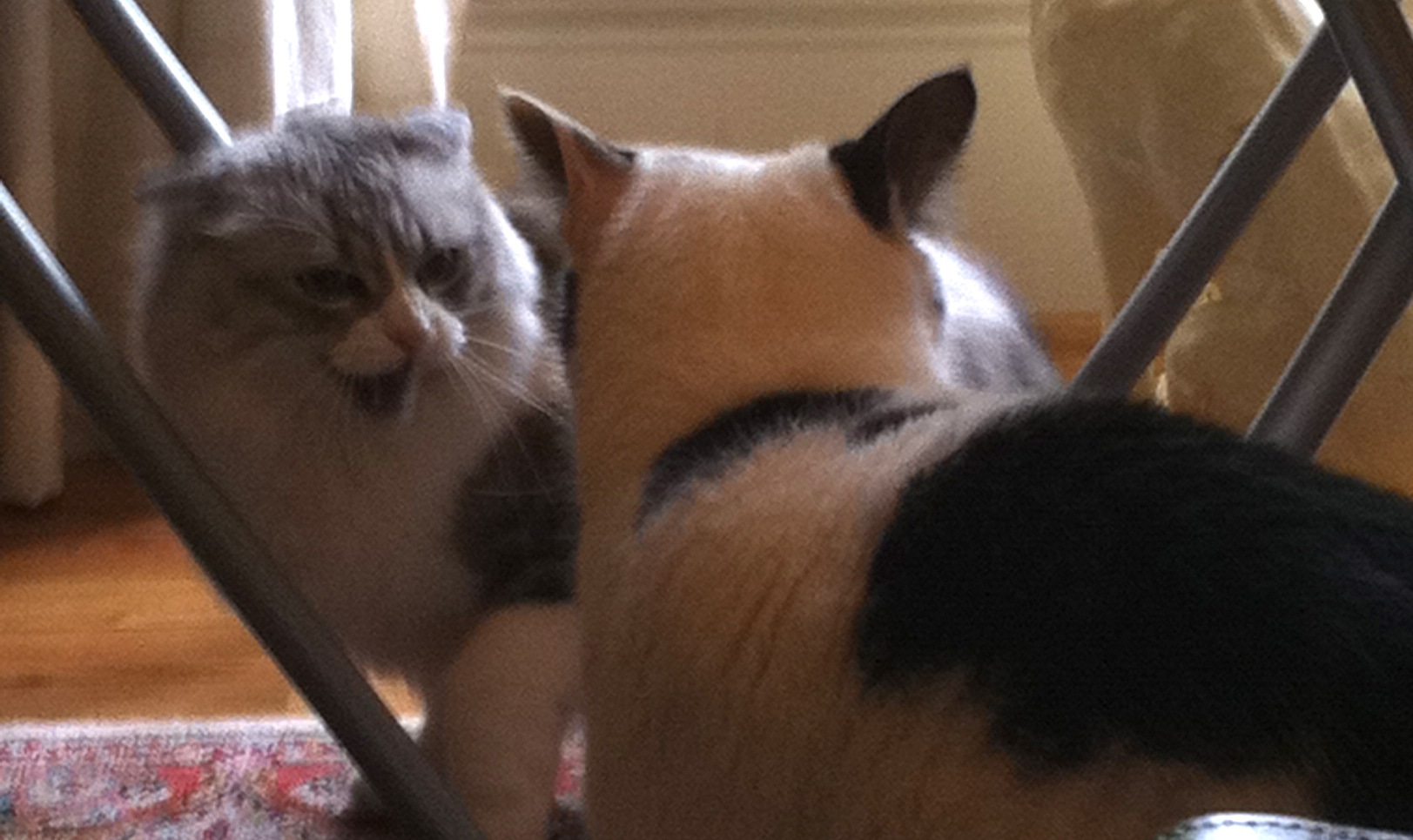
Maybe it wouldn’t be so bad if they were self-sufficient dear little things but they all have major baggage which they unpack and throw about the room on a daily basis. The cats are, well, cats. Their love is contingent on whether or not you gave them “the wet stuff” that night for dinner or let them outside to sun on the deck (they are indoor cats) or in some way did something for them. And it’s a pretty paltry sort of love, I have to say, when it does come. Cats aren’t clingy and for that I’m grateful. But they’re not particularly affectionate either (at least ours aren’t) and it makes you wonder why you pay all the vet bills and Meow Mix and God knows, tons of kitty litter. Really doesn’t seem to be the kind of payback that you’d expect for all the effort and money. Having said that, we are, of course, attached to the aloof little beasties, but ideal pets I cannot say they are.

So the cats, not so much. And les chiens? Well, Buddy is beautiful but stupid which doesn’t matter, really, because he’s also desperately sweet. But he has none of the beneficial dog traits you use to reason why you have a dog for all the trouble. He doesn’t greet you when you come home (he doesn’t even lift his head off the couch pillow), he doesn’t sleep with you at night, he sometimes forgets that it’s the outdoors where he’s supposed to crap (WTH…??) and he will eat cat litter (and all that that entails) if there is any way possible. Euweeeu.

Then there is Lucy the Puppy. Also known as Lucy the Terrible and Lucy the All-Powerful who is, on the other hand, really, really smart. Like Lex Luther smart or some other mad, evil genius. Lucy, who is a Westie, tortures the poor cats—fearlessly and tenaciously attempting to rid the household of what she considers Grade A vermin. She destroys everything she comes into contact with—newspapers, slippers, measuring cups, dog and cat toys, eye glasses—in seconds and irrevocably. She does, on the other hand, go totally berserk with happiness when she sees you after any kind of separation (Buddy, take notes.) She considers it part of her job to “pre-rinse” (with her tongue) the dirty dishes in the dishwasher, and she informs all chipmunks, squirrels, mice, birds, bunnies and even a good sized coyote to stay clear of her yard. (Come to think of it, she’s also had words with the mailman.)

I confess I often wish I didn’t have quite so many lovies. All the water bowl filling, litter box changing, dog leashes, unique needs, prickly personalities, special diets, accidents, varying bed times and crate times—is wearing me out. My husband is quick to remind me that I was the one who got us into this fix (three of the four were foundlings) with all their diverse and discordant personalities.

On top of that, they all somewhat hate each other, with the exception of Lucy who’d like to do her rat-terrier thing on the cats’ necks but who loves Buddy in a very scary, stalking kind of way that has the poor dog hiding under sofas and behind chairs when she’s on the loose.

While I admit I have told my husband that we will never replace a single one of these beloved creatures when the time comes for us to forge on alone, I have to say I’m rethinking that promise. It’s not that any of the little darlings is any more perfect. God knows, if anything, the older they get, (like people) the more entrenched their personalities and habits become. I’m not sure but it’s possible my change of heart may have something to do with the sound of my only child shuffling through his college acceptances for next fall.

Maybe a Cockatiel.

Downton Abbey Meets Invercargill

I just finished reading a great slice-of-life memoir a from a friend of mine in New Zealand. I lived in New Zealand from 1984 to 1986 and will always have a special place in my heart for that magical country “down under.” But what I’m loving about my friend’s memoir, The Boltons of the Little Boltons, is that it is a remembrance of the period of time in my friend’s life when he and his wife decided to move to the UK to become domestic servants to a wealthy, titled, English couple. They were successful writers in NZ who decided to have a Downton Abbey adventure (about twenty years before Julian Fellowes got his brainstorm.)

Like in the States, there is no class system in New Zealand so my friends, who are educated, well-travelled and professional people, had many significant adjustments and singular experiences (which, also, as it turned out, was brilliant material for a book!) I am loving the book and find myself so envious of their experience. Their children were grown and out of the nest when they had their adventure but, even so, England is a long, long way from New Zealand and their entire world.

As I read, I marvel at, not only their bravery (after all they are both intrepid and had lived in other parts of the world for extended periods of time so it wasn’t too much of a jolt for them in that way) but at their flexibility. It’s hard, after a certain age, to accept a wide range of inconveniences, which, I think, travel largely is. You have to be okay with strange beds, strange foods, lack of security in routine or routes, and a general fare of continual, relentless, surprise. When I was younger, that was the very thing I loved about travel—the not knowing, the surprises. Now, not so much. I hate how I’m so damn happy to crawl back into my own bed after a trip. Or how ecstatic I am to see the pets and the garden.

As it happens, I was a newlywed living in the Cotswolds while my Kiwi friends were being cooks and housemaids in London in 1991. They came down to our little cottage in Compton Abdale to see us—since a visit to either Atlanta or Auckland was harder to come by—and they told some of their “Upstairs-Downstairs” tales then. Actually, I might’ve been at a good age to do something similar, but just then I wasn’t “where they were.” They were empty nesters and I had yet to put the first egg in mine. Plus, I had just married and was keen to set up house and see the sights from that particular voyage first.

I think that’s the marvelous thing about memoirs—the re-living of a special time—a time that can never come again—can actually transport you in ways that no DC10 or Euro-rail system can. And if you write—or are lucky enough to share a memorable time with someone who does—you can recreate that time and go back there in vivid detail and living color over and over again. And when you do, inevitably you’ll meet and get to know all over again the most amazing people: not just loved ones who are no longer with us, but someone else who is no longer with us—your younger self.

Are Amazon’s Five-Star Reviews the Road to Success?

I have a friend whose grown daughter teaches drama for preschoolers in DC.  I asked how she ended up doing that when all we’d ever heard about Casey for years was how she was going to be an actress. (She was gorgeous, sang, danced, went to Tisch at NYU, performed at Disney World every summer, and made it to off-off Broadway.) Her mother said Casey came to the point where she finally knew her big break probably wasn’t going to happen. (She was at the point where “ingénue” didn’t fit any more and she was now skating very close to the point where the go-be-a-wife-and-mother option was almost off the table, too.) So she bailed. Her mother said: “Casey never had that fire in her belly that you need to make it in a very competitive business. She didn’t have that stab-your-bestfriend, sleep-with-whomever, step-on-whomever, do-whatever you-need-to-do-to-make-it-happen mindset.” I think about Casey sometimes when I’m looking at some young, fresh faced actress (who isn’t related to someone famous.) I wonder how nice they are or did they have to kill someone to get their present measure of fame?

I bring this up because there is a thing that we authors believe (probably accurately) will help us in our quest to bestsellerdom (or at least a consistent fifty books sold a month). That is the Five-Star Amazon Review.

First, it’s amazing to me that we are still trying to directly control our sales numbers. We’re still trying to do the three-steps-to-amazing-book-sales thing because the alternative: writing the next awesome book while we’re waiting for success to happen doesn’t feel like it’s directly addressing the problem of low book sales. The key here is the word “direct.” Going back to the keyboard for another three months of labor isn’t directly affecting your book sales. It’s a slow, down-the-road kind of process. But we are a people who “want it NOW.” The idea that the best way to sell books is to write a great book in the first place and then turn around and write another one (all the while praying for one of them to “hit”) is just too passive to be believed, let alone lived.

We still want to believe we have direct control over obtaining book sales success. It’s just another demonstration of the fact that we can’t accept there’s not something we can do to ensure our success will happen. We’ve seen so many Disney movies, so we know how it all works out and if we have to help it along a little, like maybe lie or misrepresent the truth, well, since the happy ending is what we’re all aiming for, what does it matter?

When you’ve been fed a constant diet of “you can do it” and combine it with a national tendency not to put too many restraints on our desires or wants (witness our national obesity problem), you have a situation where cheating or lying can be justified in the process of achieving the Big Dream.

I know writing up a bunch of fake reviews for your pals to post on your books on Amazon isn’t treason or Sin with a capital “S,” but I do think it’s a little shameful. I know you can justify writing a glowing five-star review for yourself by thinking “if they would only give it a try I’m sure they’ll love it!” Plus, you know a lot of other writers are doing it, too, so it’s not unlike when you were in high school working your butt off to get A’s while the C students were cheating and pulling down the very same GPA. It wasn’t fair but climbing down into the hog pen with them wasn’t the solution then and it isn’t now.

I say, be passionate. Absolutely use that fire in your belly to write until the wee hours, push past exhaustion to make those deadlines, buck yourself up in the face of a few bad reviews, smile when your friends and family are condescending to you about being a writer—do what you can to keep your dream alive and keep your keyboard smoking. But have some self-restraint for pity’s sake. (And think about it: if you’re really asking your friends to do this, maybe there’s a reason why they don’t take you seriously as a “writer.”)

As Peter Bowerman, author of The Well-Fed Writer, said in an article in the November 2011 issue of the IBPA Independent:

“The currency of a five-star review is becoming devalued day by day…Focus on making your books as good as they can possibly be, in every way—better than they have to be, in fact (a part of the publishing process, over which, incidentally, you have 100% total control). Do that and the praise will be genuine and will come naturally. But, more important, your book will benefit from priceless word of mouth, which will build an enduring demand for the title. And that’s something the author of a mediocre book who’s resorted to fraudulent reviews can never hope to enjoy. For when real reviewers and real readers really read the real book, and speak the real truth, the jig’s up.”

Amen!

The Power Of “No”

I hear that the employees working at Apple stores are not able to use a certain word when dealing with their customers. (And no, it’s not “Microsoft.”) Those black-teed employees tasked to work the “Genius Bar,” which is almost exclusively the arena of Apple customers who have a problem, are particularly warned against using the word.

The word is “unfortunately.”

On the face of it, that doesn’t seem like such a terrible word to be banned across 357 stores worldwide and it definitely takes some thought as to why that word.  I guess “unfortunately” is a banned word because it is not helpful and does not suggest a solution. It prefaces a re-stating of some problem or, worse, the prediction of a negative result for some problem. Any way you look at, stating the word “unfortunately” probably isn’t going to help anyone who is looking to have a problem solved.

If someone is forced to buckle down straightaway with the chore of solving a problem without wasting time recycling all the tiresome reasons as to WHY it’s a problem, and thereby getting into a negative mindset at the outset, I imagine that can only be a good thing. Plus, there is opportunity in the word “unfortunately.” Opportunity to discover something else that is an unhappy offshoot of the original problem, perhaps. Or opportunity to explore the possibility that there is no solution.

The fact is, once you start a sentence with “unfortunately,” no good can come of it. Your mind picks up the thread and fills in the rest of the sentence and it never ends well. Somehow Steve Jobs and his denizens realized this. I’m a big enough fan of most of the wonderful things that Mr. Jobs created in his perfect techno-world to pay attention to this at-first-quirky employers’ edict.

And, of course, like all great maxims, it works across  other arenas as well. A marriage proposal with the word “unfortunately” in it is not a good sign. A job offer that encompasses the word “unfortunately” is not a positive start either. When you are moving forward with your dreams—while it’s important not to be a total fool about what can and can’t happen—I  would say that using the word “unfortunately” during your planning period will aid in booby-trapping your efforts right out of the box. You have enough things working against you without your language working you over, too.

When I used to jump horses, my trainer would tell me that if I heard even the faintest whisper of a voice in my head as I lined up the jump leading to the coop suggesting my horse and I would not be able to make it over, then I should know that we wouldn’t, in all likelihood, successfully jump it.

She was right.

One thing I’ve learned is that little voice in your head has big power. So big, in fact that in addition to forbidding it to say certain words, there seems great equity in training it to say “you are awesome!” or “you can do it!” from time to time too. Especially if you can’t find anybody to cheer your cause,  why not pick up the pom-pom and start things off yourself? Get into the habit of carrying around your own cheering squad in your head and you never know where you may end up!

Not to take anything from the power of “no.” But just imagine the power of “yes.”

Living Your Dream at the Worst Possible Time

Ten years ago I  wrote a book called “Quit Your Job, Move to Paris.” I wrote it after a young dewy-eyed college grad interviewed with me at the bank where I was working in the advertising department. (Dear God, I’m depressing myself just writing the words.) She’d recently graduated with a degree in advertising and wanted to know what she should do to, basically, get my job. I looked at her and asked: “Are you married?” She blushed prettily and shook her head. I said: “So no kids?” She reddened not so prettily and frowned at me. “Of course not,” she said. “Do you own your own home?” “I’m only 21,” she replied, as if speaking to a seriously mentally impaired individual. (Kind of like how my teenager speaks to me all the time but that’s another blog.) I said: “So, no ties, no mortgage, no private school tuition. My advice to you is…” She poised her little pen over her little steno pad.

Well, you can probably guess what I said (see above title of aforementioned book) and she did not appreciate being led on as she put it. In addition to being a new college graduate, she also happened to be the daughter of the bank’s vice president so I’m not sure why she even bothered to get my take on anything. She should’ve just gone to her Dad and said: “I want her job, please, Daddy.”

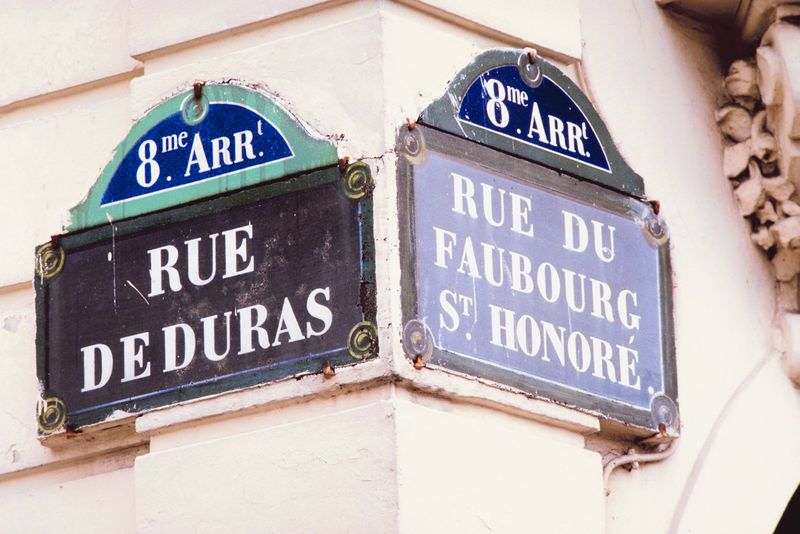
But see, I had a mortgage and a kid (plus two step-kids, but again, another time, another blog) and the idea of “living my passion” or waking up and smelling the croissants on the Rue de la Paix or spending a year writing a novel was about as possible as starring in a Broadway musical. She was young. She had her whole life ahead of her. Her choices hadn’t been made yet. From my perspective, I thought she should take advantage of her freedom while she had it, as if passion—for writing or travel or acting or anything—would dry up or run out like sand in an hourglass.

When I wrote the “Quit Your Job” book, I ended up researching various chapters on different life situations to suggest ways and ideas of how moving to Paris for a period of time might be possible: married with kids, single with kids, etc. During the course of my research, I discovered how it would be possible for me to go, too. The  information I came up with for my own situation was good and bad. The good news was: I learned I could go! I learned how I could make it happen! The bad news was: I chose not to. Yeah, I know. That part sucked. But it still helped to know I had a choice. I didn’t pack up the kid and the husband and shoot off to France in 2001 because when I sat down and thought about it, I realized I wanted other things more. Things that couldn’t happen if I took the Paris option at that time.

Funny thing about passion, though. If it’s real, it tends to stay with you. I don’t work in a corporate advertising department any more. I write full time. As for the Paris thing, well, my son is sifting through his college acceptances even as we speak which means, next year, he’s launched into his grand adventure. And guess what? Turns out, Paris is still there!

Seems that silly college girl was right about one thing: there really isn’t a time limit on passions after all.

The Top 3 Reasons Why Book Trailers are Worthless

I don’t know about you, but I’m pretty sure book trailers have been done before. And they weren’t successful then either. We all remember the thirty-second television ads that you’d see from time to time for a book. There was always a disconnect—watching a visual medium trying to excite you about a nonvisual medium. First, books are SO personal and the images we create in our heads of the stories and settings of books are so unique to our own personal world construct, that it’s hard to see what would work in a mass media presentation. Has a video ever succeeded in selling a book? Ever? It’s one thing to see a movie of a book you’ve already read. Most of us can switch gears pretty quickly to align our vision of what Hogwarts looked like with that of Director Chris Columbus’. And ever after that, of course, it’s his vision we see in our heads as we read the rest of the series.

I was watching a BBC time travel show last winter called “The Outcasts,” (really good BTW but cancelled after one season) and at one point the camera focused on the main character’s face as she opened up a chest that held an alien creature germane to the survival of the colony. The camera hesitated a tad too long on the woman’s face and I found myself thinking: “If you do a cut away to the next scene without showing us what it looked like (presumably to save on the production cost of creating the alien thing), I’m going to be pissed. If I wanted to use my imagination, I’d read a book.”

The point is, we have certain expectations from each of our mediums. Trying to pretend that a book is a movie and that we are excited and teased by it in the same way as a movie is silly. For one thing, our experience with a book will typically be more invested than with a movie. A movie may cost the same but it’s only about 90 minutes of your time. A book will likely go with you on your daily round and fall asleep with you at night. You will access the book on your own schedule, and dip into it or read it straight through based on your mood and timing—not your neighborhood Cineplex’s. It’s a relationship. Whatever actress or animation you see in the book trailer is not who you would have created in your own mind. The book trailer actually succeeds in making the world created in the book less real.

Top three reasons not to waste your time producing a book trailer:

  1. If the production is decent, you—as the author—will come off looking a little smarmy and slick. And not-so-deep down we all know it just means you spent money for a professional video editor. It has nothing to do with the promise of the quality of the book.
  2. If the production is lame, and indie book trailers often are with their sappy music, indecipherable text fonts, and amateurish slides, most people—used to very sophisticated video productions—will run like hell from you and your book.
  3. Finally, not only is the medium of video inadequate to sell the complex, detailed world expected from a book, but so is the time allotment. Sixty seconds—the recommended length for a book trailer—just isn’t long enough to do the job. Wrong medium, wrong message. Books aren’t movies. They can’t be advertised like movies.

Also, my brief visit to Wikipedia today informed me that book trailers were originally created to get nonreaders interested in picking up a book. That makes sense. If someone doesn’t read, he likely gets his stories from TV or movies, so a movie would be a good way to try to reach him.  But, unless you’re trying to talk your audience into reading, rather than specifically reading your book, it’s probably a better use of your time to let the indie filmmakers keep their trailers and you do other things to promote your book!

Having said that, I’ve got a book trailer for my book Toujours Dead that was loads of fun to do, (I’m an amateur film editor) though I won’t be repeating the experience anytime soon. Anyone else have a feeling one way or the other about the benefits of book trailers? Or proof of how a book trailer helped to sell books? Love to hear from you!

Is it the end of bookstores or the sound of one hand clapping?

I didn’t rejoice when Borders announced last fall that they were going belly up, but, at the time, I didn’t really care, either. I’d long since stopped buying even paperbacks there although it was still nice on an unhurried lunch hour to browse through their magazine shelves to flip through periodicals I never knew existed. Except for the odd gift here and there, I can’t remember buying a hardback book at any of the big box bookstores for at least five years. And since the advent of the affordable e-reader, I haven’t even bothered picking up a paperback book from Wal-Mart—not when it’s so much more convenient, not to mention cheaper, to download it to my Kindle. (Brick and mortar bookstores require climbing out of your bunny slippers and driving. Real-place bookstores require parking and standing in line. When I want the third book in the Hunger Games series, I want it NOW.)

So why does it feel, with the closing of this once warm and happy place (and oh! it always smelled so good inside!) like the world has turned its back on reading and literature—not just the method by which it was delivered to us? If anything, thanks to e-readers and smartphones, we’re all reading much more than before. We’re reading in line at movie theaters, in doctors’ offices, and even while waiting for traffic lights (well, maybe that’s just me).  Plus, now that there is no tell-tale cover of heaving bosoms or pre-teen sci-fi fantasy, no one can see what we’re reading either.

The sad, bare shelves aside, it wasn’t reading we were turning our backs on, even though that’s how it felt last fall when my husband and I picked over the rumble sale that was our neighborhood Borders store. What we really lost was the pleasure of browsing that the big bookstore afforded. Anchoring an outdoor string of Pottery Barns and Gaps, the Borders in our neighborhood was the only way we could turn a “trip to the mall” into a joint affair. Neither of us can manage to wander around Williams and Sonoma for an hour (as much as we like the place) but we could always get happily lost, coffee cup in hand, at Borders for much longer. (Plus, I could even leave him and go to J Crew and come back and he was still happy to be “out shopping” with me. Win-win.)

Reading is, by its nature, a solitary pleasure but the big box bookstores gave us a steady stream of coffee and plush chairs and brought other bibliophiles together. They surrounded us with all the lush colors of one magnificent book cover after another—in fact rows and rows and stacks and stacks of them—the objects of our mutual desire. It was such a lovely little world. And for awhile it didn’t matter that we weren’t actually buying anything. In fact, for years I stubbornly refused to pay $25 for a hardback book. I picked  them up, read the blurb copy, and photographed the gorgeous covers with my cellphone so that I could find them later either at the library or as an e-book. For me, the big bookstores—and the mom and pops for that matter—were about everything except actually purchasing the book. They were about fellowship, good coffee, relaxed browsing, and discovering new books.

I wonder, amid all the wondering of what the future of bookstores will be, if there might someday once again be a place to congregate—with coffee and plush chairs and other book lovers. Oh, that’s right…that’d be the Internet Book Clubs. And the coffee is chez vous and the plush chair is your living room couch. It’s just that, it seems to me, especially on top of the worry that my Boomer generation often confesses to about our children’s generation possibly having difficulty “connecting” in person, might this be another nail in the coffin of personal interaction?